The Seagulls of Mont Saint-Michel
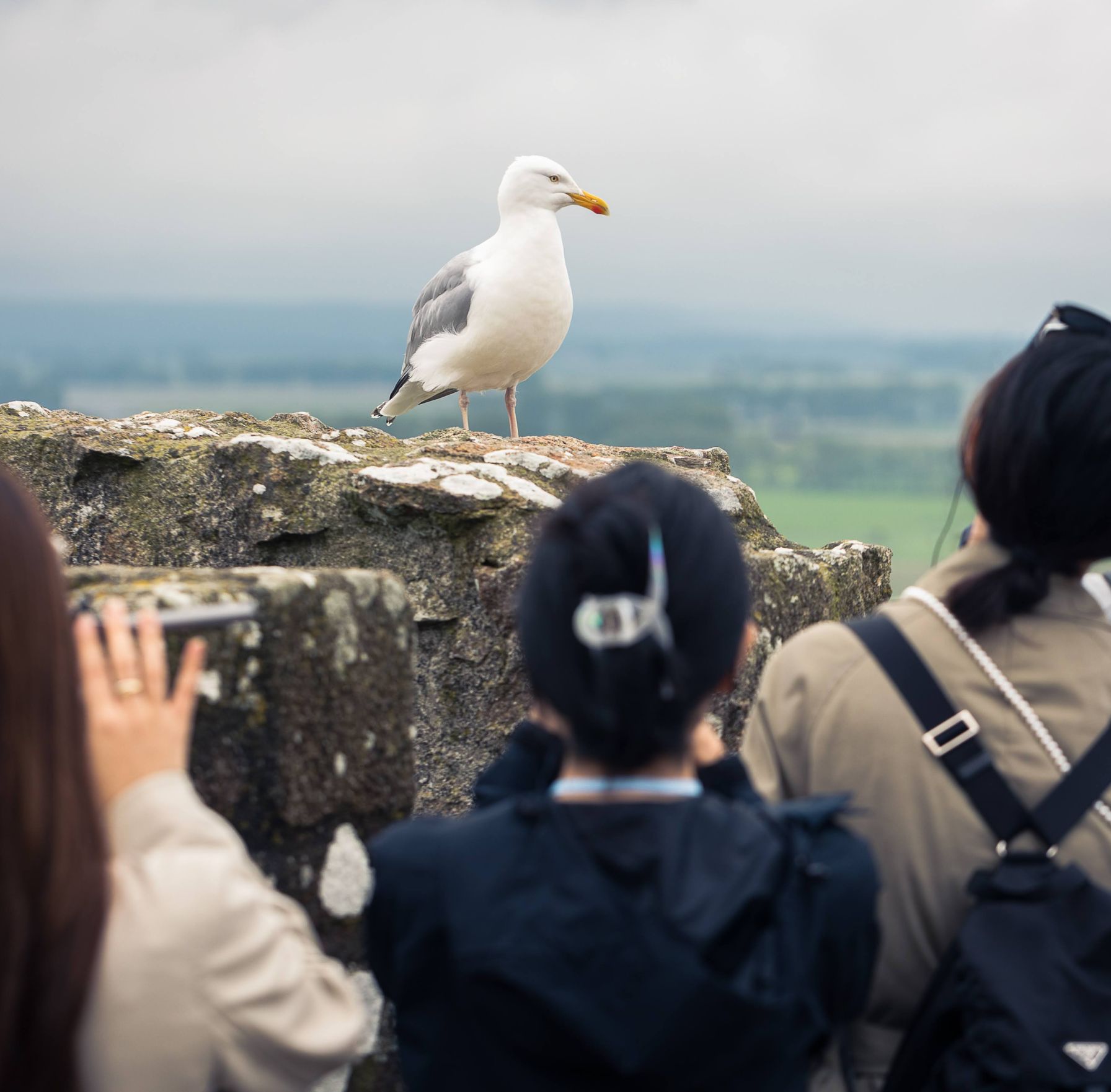
Three species of gulls have made their home at Mont Saint-Michel. To encourage a good cohabitation between the birds and visitors, Mont Saint-Michel is here to help! This guide will help you get to know them better, adopt the right habits to better understand their presence on the site, and provide you with all the useful contacts.
For a cohabitation without ruffling feathers
Gulls: a protected species
Although their strong presence in urban areas might suggest their numbers are growing, surveys show that gull populations in France have actually been declining since the 1980s. The herring gull, the lesser black-backed gull, and the great black-backed gull are now considered threatened species.
What the law says
As protected species, it is prohibited to capture, move, disturb, destroy, or alter the resting and breeding areas of gulls, as well as their eggs and nests (Article L411-1 of the French Environmental Code).
Anyone found intentionally disturbing them is liable to prosecution.
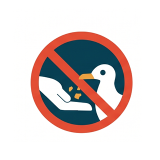
Do not feed them
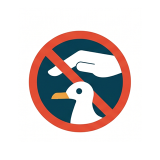
Do not touch or interfere

Drone flights prohibited
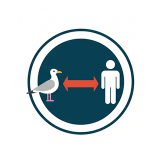
Keep your distance
Cohabiting with gulls: the right habits
ALL YEAR ROUND
January to December
- Do not feed the gulls
Gulls settle more easily in urban areas when they have access to food. Feeding them can result in a fine. - Remove access to waste
Keep your rubbish in tightly closed bins. Clear away any litter nearby. - Do not intervene
Avoid any contact with gulls (eggs, chicks, adults), even if they appear injured or in danger. If necessary, contact the town hall or the French Biodiversity Agency (OFB), who will assess the situation.
BEFORE THE NESTING SEASON
November to February
- Prevent nest building
Remove anything from roofs, terraces, and gutters that could be used to build a nest (twigs, vegetation, plastic, etc.).
DURING THE NESTING SEASON
April to August
- If a nest has been built
Do not destroy or move it, and do not break the eggs. Doing so may trigger a new laying cycle and extend the nesting period — and it is prohibited by law. - Keep your distance and keep pets on a leash
While incubating eggs or feeding their young, gulls will defend their territory against anyone who comes too close. - If young gulls are on the ground
Do not move or feed them. Even if the parents seem absent, they are still nearby and caring for them. - If cohabitation becomes an issue, or a chick appears injured or in difficulty
Contact the town hall or the French Biodiversity Agency (OFB) to assess the situation before taking any action.
The different gull species of Mont Saint-Michel

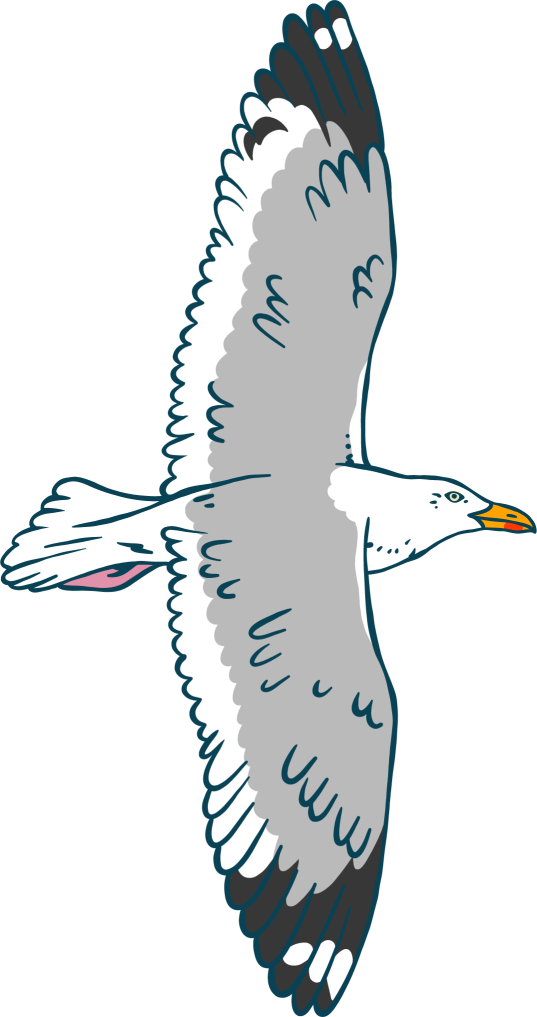
Larus Argentatus
European Herring Gull
- Light grey back
- Pink legs
- Wingspan: 1.40 m

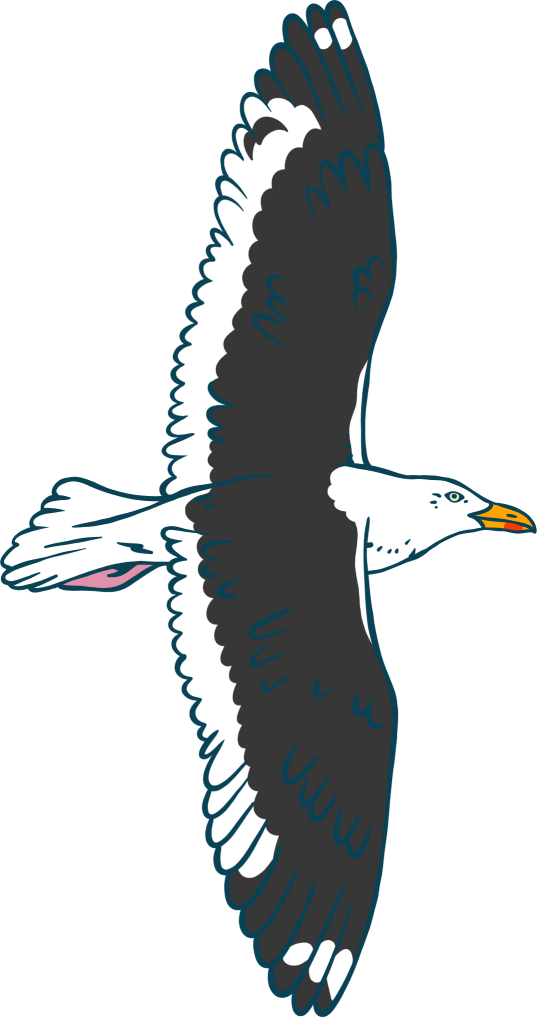
Larus Marinus
Great Black-Backed Gull
- Black back
- Pink legs
- Wingspan: 1.60 m
- the largest of the gulls

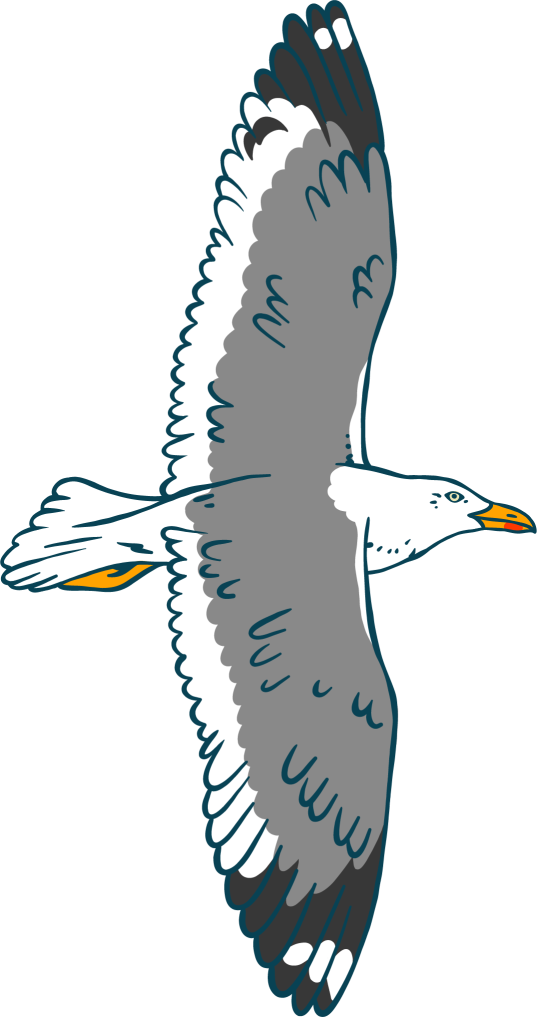
Larus Fuscus
Lesser Black-Backed Gull
- Dark grey back
- Yellow legs
- Wingspan: 1.25 m
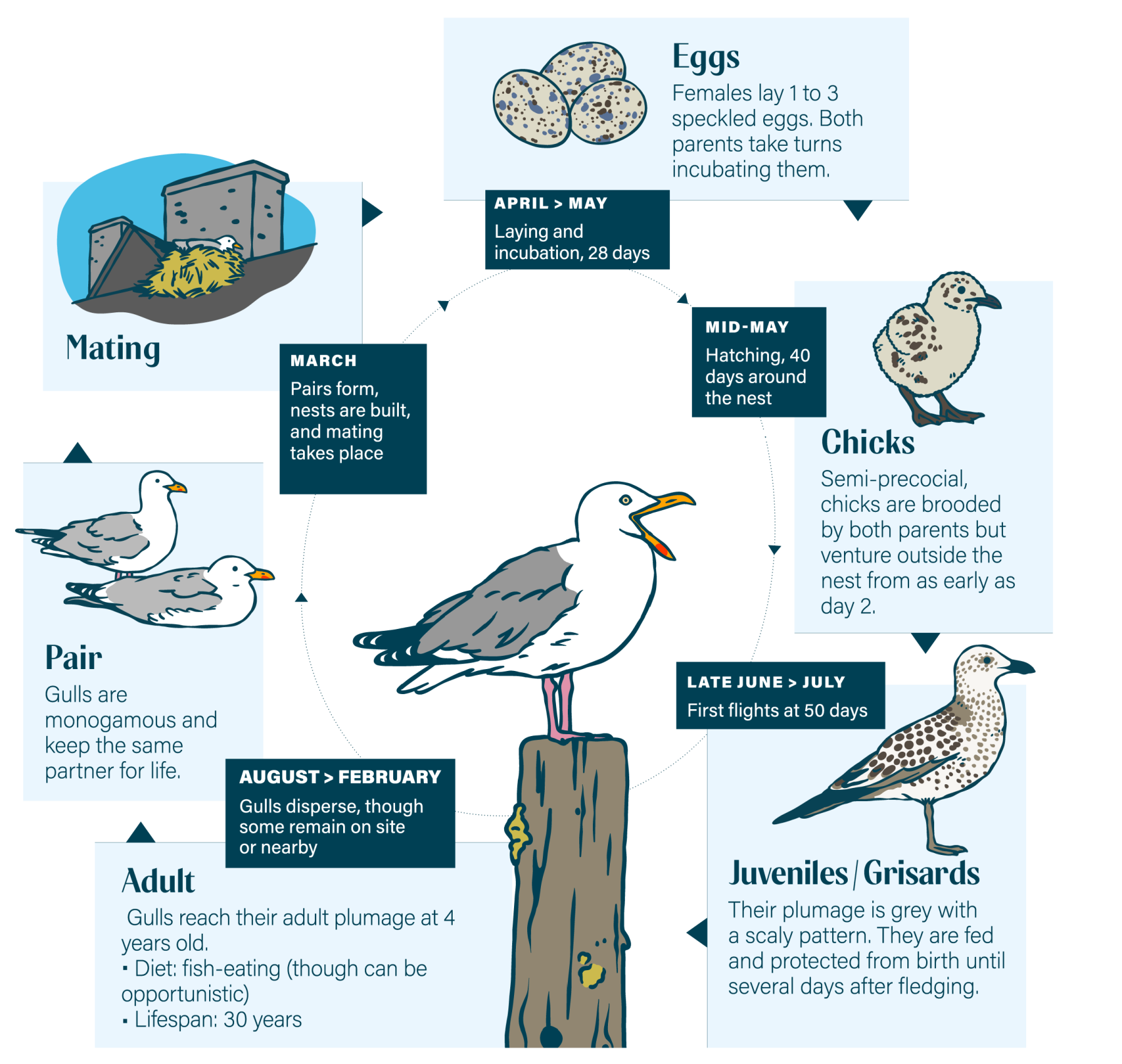
Life Cycle of the Gull

Public bodies of Mont Saint-Michel committed to biodiversity
Commune, abbaye (Centre des Monuments Nationaux), établissement public, and Office français de la biodiversité (OFB) are working in partnership to protect the wildlife of Mont Saint-Michel.
Useful contacts
Reporting (injured or distressed gulls)
Advice (difficult cohabitation)
+33 7 40 32
sd50@ofb.gouv.fr
Information, surveys
+33 2 33 89 01 01
etablissement.public@montsaintmichel.gouv.fr
In case of dead animals
+33 7 28 29 14
police@lemontsaintmichel.eu
Acknowledgements
This document draws on materials created by the Ystopia association and the town of Douarnenez, as part of their programme Mieux cohabiter avec les goélands nicheurs urbains (Better cohabiting with urban nesting gulls) in Douarnenez.